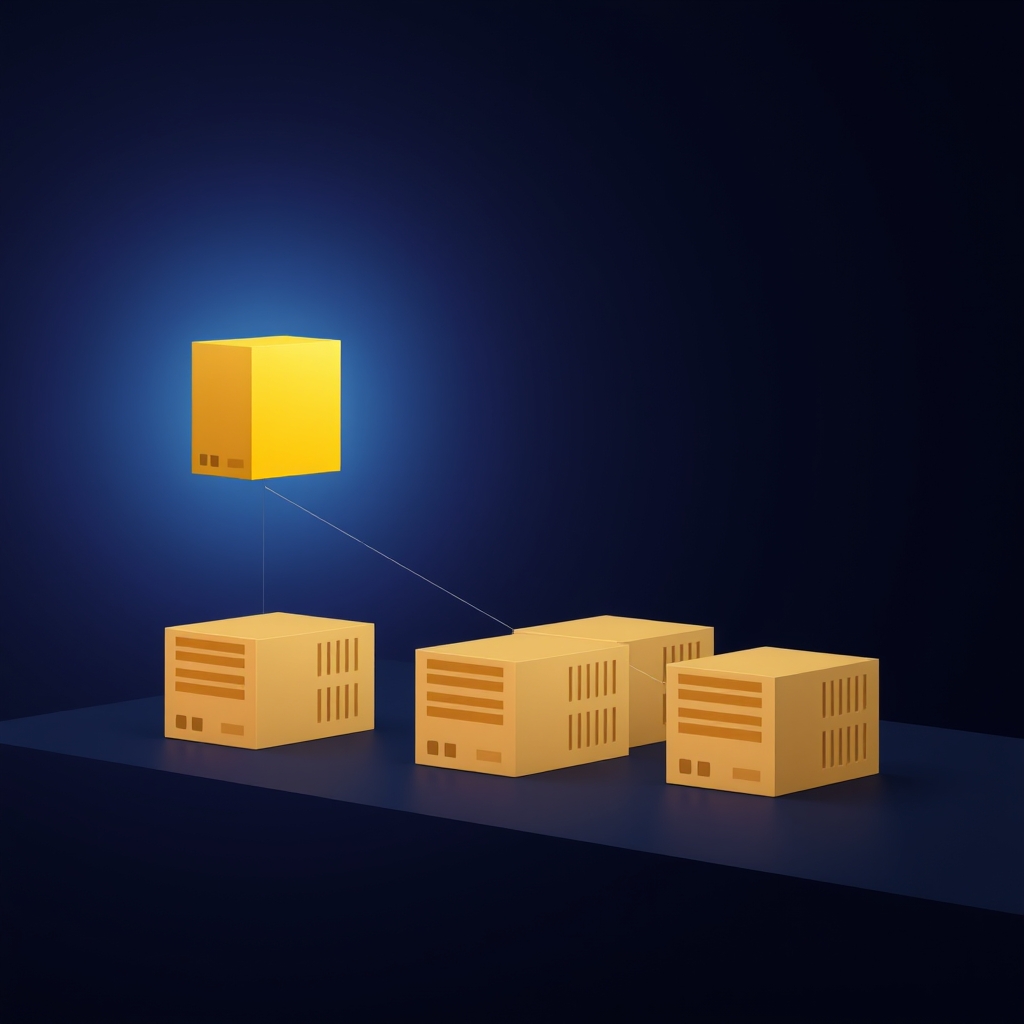
There's a server in your fleet right now that nobody wants to touch. It's been running for three years. It has 47 packages that were manually installed. Someone SSH'd into it last February to fix a production issue and left behind a modified config file that never made it back to version control. It works -- nobody knows exactly why -- and the mere thought of rebooting it makes your senior engineer break into a cold sweat.
This is what mutable infrastructure gets you. Not always, not inevitably, but often enough that every operations team has at least one of these horror stories. The server that can never be rebuilt. The instance that must never be terminated. The machine that is, for all practical purposes, irreplaceable. We used to call these pets. The industry decided we should treat them like cattle instead. But the real insight isn't about the metaphor. It's about the mindset behind it.
The Snowflake Problem
Mutable infrastructure -- servers you update in place, patch incrementally, and configure over time -- has a fundamental problem: drift. Every manual change, every hotfix applied directly to production, every package installed to debug an issue creates a gap between what you think the server looks like and what it actually looks like.
Configuration management tools like Chef, Puppet, and Ansible were supposed to solve this. Define your desired state in code. Let the tool converge the server to that state. Problem solved. Except it wasn't. Because configuration management operates on a mutable substrate. It modifies existing servers. It patches. It updates. It appends. And between convergence runs, humans still SSH in and make changes. The tool fights drift, but it can never fully win because the underlying model -- a long-lived server that accumulates state over time -- is fundamentally incompatible with reproducibility.
The result is snowflake servers. Each one is unique. Each one has a slightly different history of patches, hotfixes, and manual interventions. Each one is a liability because you can't be confident that rebuilding it from scratch would produce the same result. When you can't reproduce your infrastructure, you can't trust it. And when you can't trust it, you're operating on hope.
What Immutability Actually Means
Immutable infrastructure flips the model. Instead of updating servers in place, you replace them entirely. Need to deploy new code? Build a new image, launch new instances, route traffic to them, terminate the old ones. Need to patch the OS? Same thing. Build a new image with the patches, replace the fleet. Need to change a configuration value? You guessed it. New image. New instances. Old ones go away.
Nothing is ever modified in place. Servers are born from a known-good image and they die without ever being changed. There is no SSH access in production -- or if there is, it's read-only for debugging and nothing done during a debug session persists. Every server in your fleet is identical to every other server running the same image. Every server can be terminated and replaced without consequence.
This sounds extreme. It is. That's the point. The extremity is what gives you the guarantees. When you know that no server has been modified since it was created, you know that every server running the same image is identical. When you know every server is identical, you can reason about your infrastructure as a fleet instead of as a collection of unique machines. When you can reason about your fleet, you can automate against it with confidence.
Disposability as a Feature
The most important mental shift in immutable infrastructure is treating servers as disposable. Not disposable in the sense that they don't matter -- they run your production traffic. Disposable in the sense that any individual instance can be destroyed and replaced without impact.
This has profound implications for how you design systems. If any instance can disappear at any moment, your application must handle it gracefully. Sessions can't be stored locally. Data can't live on ephemeral disks. Configuration can't be baked into instance-specific files. Everything that matters must be externalized -- state in databases, sessions in distributed stores, configuration in external systems, logs shipped to central aggregation.
This might sound like extra work, and it is -- initially. But every one of these patterns also makes your system more resilient. The application that handles instance termination gracefully also handles availability zone failures gracefully. The system that externalizes state also scales horizontally. The architecture that doesn't depend on specific instances also recovers from failures automatically. Disposability doesn't just enable immutability. It enables reliability.
The Deployment Model
Immutable infrastructure fundamentally changes how deployments work. In a mutable model, deployment means pushing new code to existing servers -- often through a series of steps: pull the code, install dependencies, restart services, verify health. Each step can fail. Each server might behave differently. Rollback means reversing all of those steps, which is often harder than moving forward.
In an immutable model, deployment means launching new infrastructure alongside the old. Blue-green deployment is the canonical pattern: you have your current production environment (blue) and you bring up an identical environment with the new version (green). You test green. You verify it works. Then you switch traffic from blue to green. If something goes wrong, you switch back. Rollback is instantaneous because the old environment is still running.
Canary deployments work similarly. Route a small percentage of traffic to the new instances. Monitor error rates, latency, and business metrics. If everything looks good, gradually shift more traffic. If anything degrades, route all traffic back to the old instances. The new instances get terminated. Nothing was ever modified in place.
This model eliminates an entire class of deployment failures. There's no "the deploy script failed halfway through and now half the servers are running the new version and half are running the old version." There's no "we can't roll back because the database migration already ran." There's no "the deploy succeeded on 47 out of 50 servers and we need to figure out what's different about those three." Every instance is running a known version of a known image. Always.
Image-Based Deployment
The foundation of immutable infrastructure is the machine image -- AMIs in AWS, custom images in GCP, or container images in a containerized world. The image contains everything the instance needs to run: the operating system, runtime dependencies, application code, and base configuration. Building the image is the build step. Launching the image is the deploy step.
This makes your build pipeline the single point of truth for what runs in production. The image is built from a Dockerfile or a Packer template or an equivalent -- a versioned, reviewable, testable artifact. You can look at the image definition and know exactly what's on every server. You can diff two image versions and know exactly what changed between deployments. You can reproduce any historical version of your infrastructure by launching the corresponding image.
Containers took this idea and made it mainstream. A Docker image is immutable by design. You don't SSH into a running container and install packages. You modify the Dockerfile, build a new image, and deploy new containers. The container runtime enforces the immutability that in a VM world requires discipline and process. This is why containers accelerated adoption of immutable patterns -- they made the right thing the easy thing.
Configuration Management vs. Immutability
This isn't an either-or situation, despite how it's often framed. Configuration management tools still have a role in an immutable world -- they're useful for building images. Ansible can provision a Packer build. Chef can configure a base image. The difference is that these tools run at build time, not at runtime. They configure the image, not the running server.
The anti-pattern is using configuration management as a runtime convergence mechanism on long-lived servers. Running Chef every 30 minutes to "ensure" a server matches its desired state is a band-aid over a model that's fundamentally broken. If you need to converge, something changed. If something changed, you don't have immutable infrastructure. If you don't have immutable infrastructure, you don't have the guarantees that make automated operations reliable.
Runtime configuration -- the values that change between environments or deployments -- belongs in external systems. Feature flags, environment variables pulled from a secrets manager, configuration fetched from a service like Consul or etcd. These are not part of the image. They're injected at launch time or fetched at runtime. The image defines the behavior. The configuration parameterizes it.
Debugging and Rollback
One of the underappreciated benefits of immutable infrastructure is how much it simplifies debugging. When every server running version 2.4.1 is identical, you don't have to wonder whether the bug is caused by a configuration difference between servers. When you can launch a copy of the exact production image in a staging environment, you can reproduce production issues reliably. When your deployment history is a sequence of image versions, you can bisect problems by deploying previous images and narrowing down which change introduced the regression.
Rollback in particular becomes trivial. Rolling back a mutable deployment means undoing a series of changes in the right order, hoping that the reverse operations are actually the inverse of the forward operations. Rolling back an immutable deployment means launching instances with the previous image. That's it. The previous image hasn't changed. It's exactly what was running before. There's no "the rollback introduced a different bug because the undo script missed a step."
This confidence in rollback changes how teams approach risk. When rollback is scary and uncertain, teams deploy less frequently and batch more changes into each deployment -- which paradoxically makes each deployment riskier. When rollback is trivial and reliable, teams deploy more frequently with smaller changes. Each deployment carries less risk. Failures are easier to diagnose because the blast radius is smaller.
The Mindset Shift
The tooling for immutable infrastructure is mature and widely available. Packer, Docker, Kubernetes, auto-scaling groups, blue-green deployment patterns -- none of this is new technology. The hard part isn't the tools. It's the mindset.
Teams raised on mutable infrastructure think in terms of fixing servers. Something breaks? SSH in and fix it. Performance degrading? Tune the running system. Configuration wrong? Update the file and restart the service. These instincts are deeply ingrained, and they're exactly wrong for immutable infrastructure.
The immutable mindset says: don't fix the server. Replace it. If the replacement has the same problem, fix the image and replace the fleet. Every fix goes through the build pipeline. Every change is versioned. Every deployment is a clean slate. This feels slower at first -- you can't just SSH in and tweak something -- but it's faster in aggregate because you never have to debug "why is this one server different from the others."
The hardest habit to break is the emergency SSH. Production is down. The fix is a one-line config change. Every instinct says to SSH in, make the change, and restore service immediately. The immutable mindset says: make the change in the image definition, build a new image, deploy it through the pipeline. This takes longer in the moment. But it means the fix is captured, versioned, and automatically applied to every server -- not just the one you happened to SSH into at 3 AM.
Immutable infrastructure isn't a technology choice. It's a decision about what guarantees you want from your operational model. Choose disposability. Choose reproducibility. Choose confidence over convenience.
The teams that operate most reliably aren't the ones with the best SSH skills. They're the ones that have eliminated the need to SSH at all. They've built systems where every server is identical, every deployment is a clean replacement, and every rollback is a push of a button. The infrastructure is disposable. The guarantees are not.